Albania
 Bosnia and Herzegovina
 Bulgaria
 Croatia
 Cyprus
 Montenegro
 Czech Republic
 Denmark
 Estonia
 Spain
Spain
 Kosovo
 Lithuania
 Latvia
 Luxembourg
 Macedonia
 Germany
 Poland
 Portugal
 Romania
 Serbia
 Slovakia
 Slovenia
 Switzerland
 Sweden
 Turkey
 Hungary
 United Kingdom
 Italy
Italy
 UAE
UAE
 Hong Kong
 Kuwait
 Lebanon
 South Africa





Stem cells
Types
What are stem cells?
Stem cells are primary, non-specialised cells that have enormous reproductive potential and the ability to transform into specialised cells. Thanks to these properties, they are used in medicine to restore damaged cells.
Where can stem cells be found?
Stem cells are found in various parts of the body (including the umbilical cord blood, the umbilical cord itself and the placenta). The special feature of these stem cells is that they are young and free from environmental influences and thus have a high regenerative capacity. They can only be harvested and stored during birth.
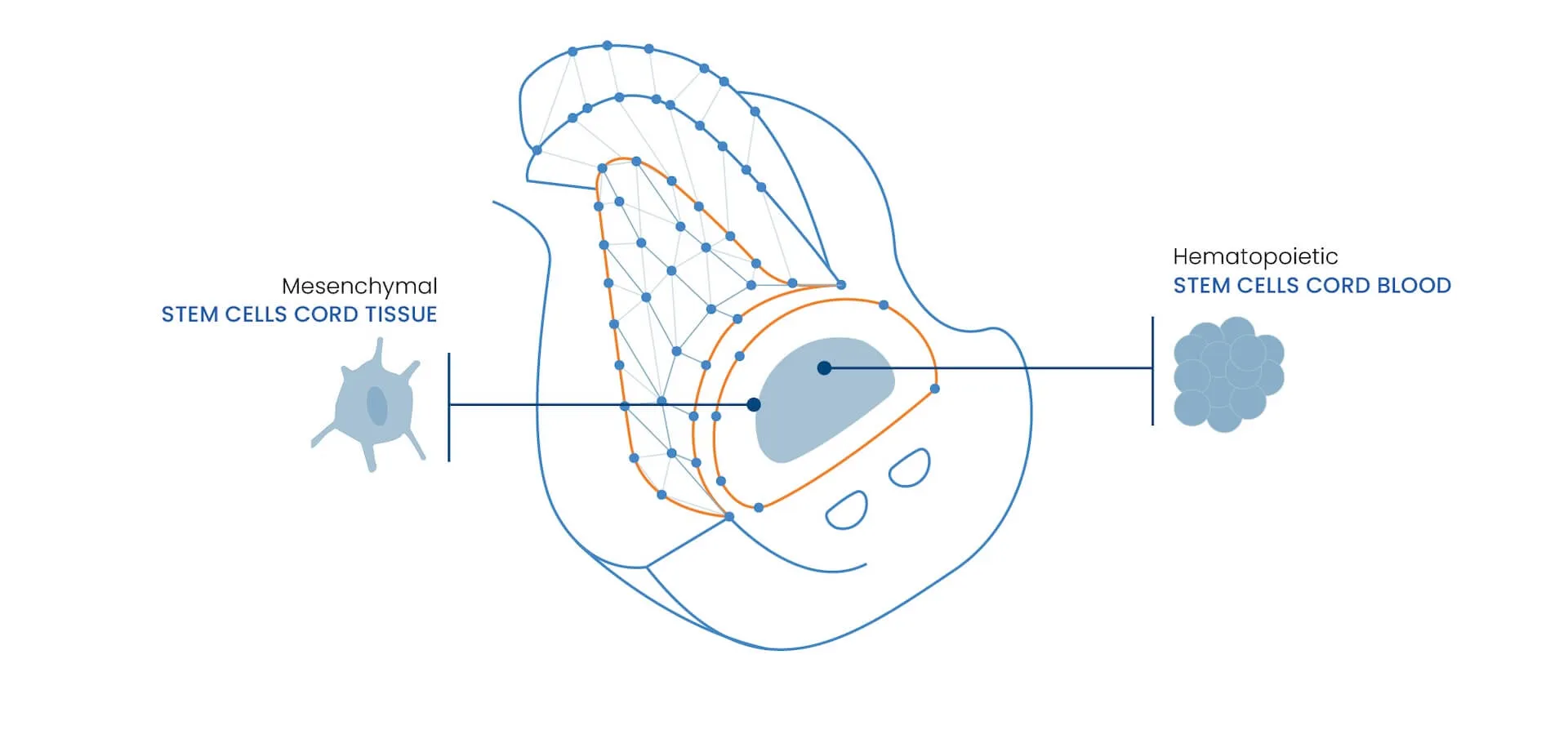
Stem cells from the umbilical cord and placenta

The umbilical cord is rich in two different types of stem cells, which can be used to treat different diseases due to their unique properties.
Hematopoietic stem cells from the umbilical cord blood: They are similar to stem cells from bone marrow and produce all cells of the blood and immune system. Currently, more than 80 diseases are treated with them.
Mesenchymal stem cells from the umbilical cord tissue: These can differentiate into cartilage, bone, muscle and other tissues. Under specific circumstances, these cells can be used for a joint transplantation with cells from the umbilical cord blood or bone marrow.
Both types of stem cells are currently being investigated in dozens of clinical trials for the treatment of diseases such as type 1 diabetes, cerebral palsy, rheumatoid arthritis, etc.



How much does stem cell storage cost?
Video: What are stem cells from the umbilical cord and placenta?
This video provides a concise overview of perinatal stem cells from the umbilical cord and placenta, including their origin, characteristics, and medical potential for current and future therapies.
Stem cells are fundamental, non-specialized cells of the body that can regenerate, multiply, and develop into different tissue types. Perinatal stem cells are safely collected at birth from the placenta, umbilical cord blood, and cord tissue and have a high regenerative potential. They may be used by the child, by family members, or for other patients. While cord blood primarily supports the blood and immune systems, cord tissue contains cells capable of forming bone, cartilage, and muscle. The placenta also provides promising stem cells for future therapies—representing a unique opportunity to preserve the body’s natural healing potential from the very beginning.